Kung Fu Film Guides
7 1970s Kung Fu Movies for Your First Watch
A collector-minded route into 1970s kung fu movies, from Shaolin brotherhood and hard-edged tests to late-decade comic action.
The best 1970s kung fu movies do not all offer the same kind of evening. Some put a group of trained fighters under pressure. Some turn a stubborn student into the centre of the story. Others build toward a formal challenge, a revenge path, or a comic two-man routine that keeps changing shape. That variety is the point. The decade is easier to enjoy when you choose a film by the experience you want, rather than trying to memorise a canon before pressing play.
The period matters because its martial arts films established an unusually rich set of screen languages. The British Film Institute’s guide to great kung fu films points to the 1970s as a period where stars, choreographers, studios, and stories made physical skill into drama. The Hong Kong Film Archive’s history of 1970s Hong Kong cinema also traces the decade’s lively shift from traditional genres toward new combinations of action, comedy, performers, and production styles.
This is not a rigid ranking. It is a first-watch route through seven real Cinema Kung Fu releases from the decade. Pick the mood that sounds right, then use that first film as a clue about what to seek next.
Best place to start: The 7 Grandmasters for a clear master-versus-master test.
Best for a group story: Five Shaolin Masters for Shaolin loyalty and several fighters with different strengths.
Best for late-decade fun: Knockabout for a more playful, stunt-driven change of pace.
What to look for in a 1970s kung fu movie
A useful first question is not “Which one is the best?” but “What kind of conflict do I want?” A school story puts technique, loyalty, and a shared history at the centre. A teacher-and-student film lets you watch a skill become meaningful through practice. A challenge picture asks whether a fighter’s reputation can survive a specific test. A comic action film gives the same physical precision a looser rhythm, where timing and personality matter as much as seriousness.
Watch how a film makes the final fight feel earned. Good 1970s kung fu cinema rarely treats action as a random interruption. An early loss identifies a weakness. A teacher’s correction, a rival’s style, or a group’s shared discipline gives the later confrontation its shape. You do not need technical knowledge to follow that logic. Notice what the hero cannot solve at first, what keeps returning in the story, and what changes once they finally understand the problem.
The studio context is useful, too. Shaw Brothers became a major engine of martial arts cinema, and Time’s profile of Run Run Shaw describes the scale of its production operation and the crossover impact of King Boxer. But a first watch should never feel like homework. The pleasures are concrete: an ensemble that clicks, a cleanly staged test, an odd teacher, a villain whose method demands a new answer, or a physical joke that becomes part of the choreography.
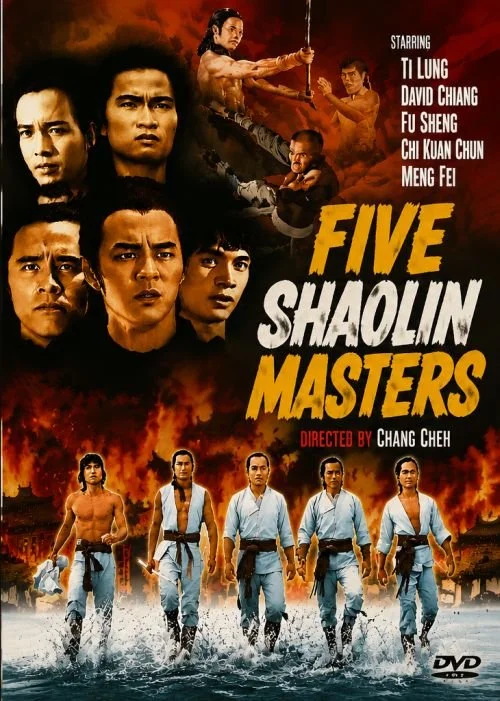
1. Five Shaolin Masters (1974): for group loyalty and different fighting personalities
Five Shaolin Masters is the pick when you want a 1970s kung fu film to feel broad, communal, and driven by shared purpose. The Cinema Kung Fu release features David Chiang, Ti Lung, Fu Sheng, Chi Kuan-Chun, and Meng Fei, a line-up that immediately suggests why an ensemble is part of the attraction. Rather than following one isolated fighter, the film invites you to notice how different personalities and strengths work under the pressure of a common cause.
Choose it when you want Shaolin atmosphere without needing a technical glossary. A group story gives every confrontation a little extra charge because loyalty is on the line as well as individual pride. One character’s choice can affect the rest, and different styles become a way of understanding how the group functions. If this balance of studio scale, distinctive faces, and collective stakes lands for you, the Shaw Brothers first-watch guide is the natural next stop.
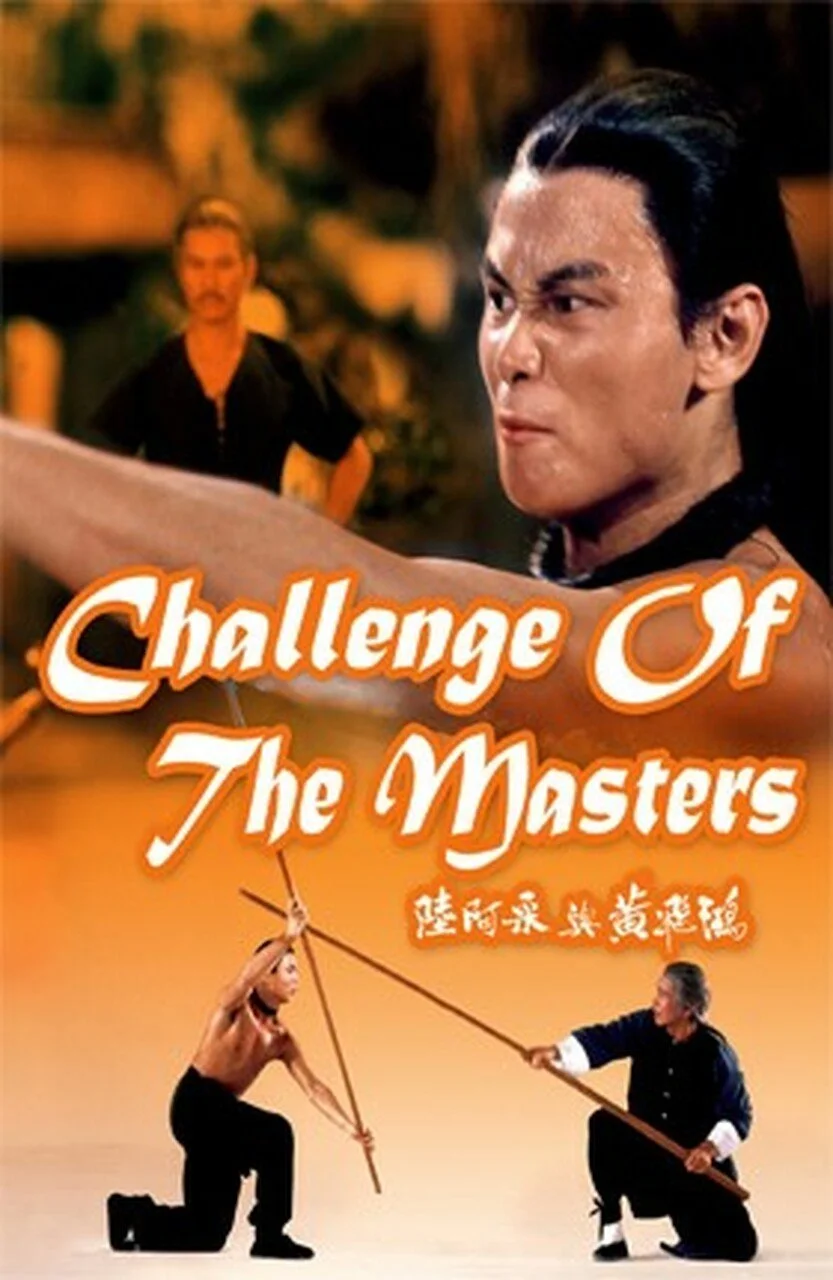
2. Challenge of the Masters (1976): for a satisfying training arc
Challenge of the Masters is for the viewer who wants to see a hero earn their answer. The catalogue identifies a young Wong Fei-hung learning Hung Gar kung fu, which gives the story a direct emotional line: raw confidence must become discipline before it can mean anything under pressure. You can enjoy the film simply by tracking that change from scene to scene.
Training stories work because practice carries a promise. A repeated task or correction looks small at first, then becomes the thing the character needs later. That connection makes the action feel like a result rather than an ornament. Start here if you like watching a relationship between teacher and pupil take shape, or if you want a film that makes improvement visible rather than magical.
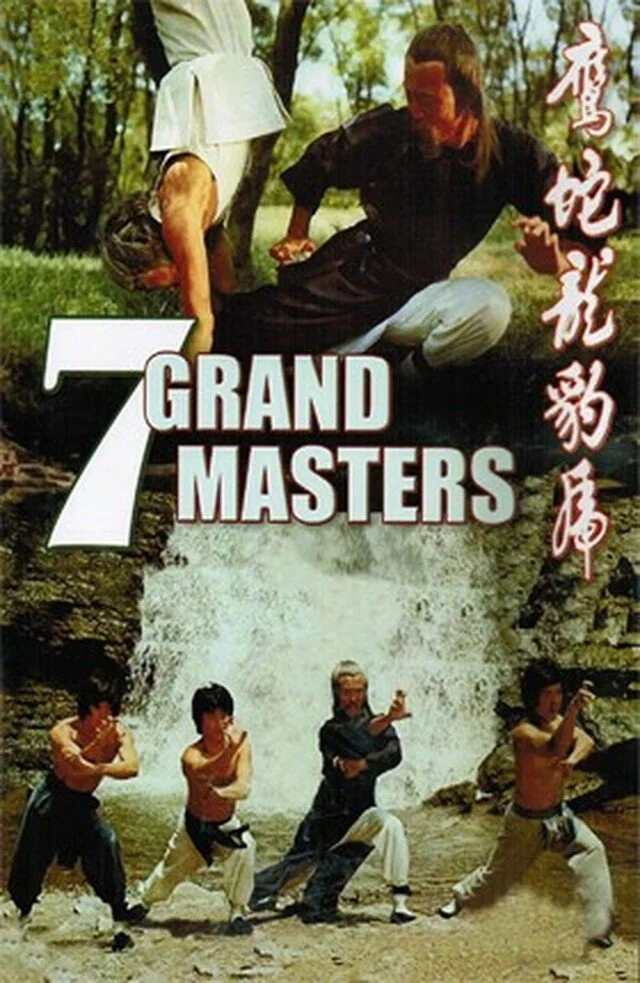
3. The 7 Grandmasters (1977): for a direct test of reputation
The 7 Grandmasters is the best starting point here when you want the premise to announce the stakes right away. Cinema Kung Fu’s listing centres on an aging martial arts expert, giving the film a simple but durable question: what does experience mean when a master has to prove it again? That is an excellent doorway into the decade because the pressure is legible before you know anything about the wider world around it.
Challenge films are satisfying when each encounter tells you something different. Look for changes in pace, range, confidence, or strategy. The value is not merely counting opponents. It is seeing whether the veteran’s judgment, humility, and ability to read a situation can hold up. Pick this one if you want a concentrated martial arts test before you branch into bigger group stories or stranger late-1970s inventions.
A simple first-watch order if you want a small 1970s marathon
For a compact three-film route, begin with The 7 Grandmasters. Its focused challenge gives you a feel for the straight-ahead dramatic engine that makes so many martial arts stories easy to enter. Follow it with Five Shaolin Masters when you want the canvas to open up into a team, a tradition, and several different fighters. Finish with Knockabout or Dance of the Drunk Mantis to see how much freedom comic timing can bring to the same physical skill.
That order is not a claim that the films must be watched chronologically or that one style replaces another. It simply gives a new viewer contrast. You move from a test of mastery to shared purpose, then into personality and play. By the end, you will know whether you are looking for stricter school stories, an ensemble, a stranger training method, or a lighter rhythm, which is far more useful than a long list of titles with no way to choose between them.
4. The Tattoo Connection (1978): for a sharper international-action detour
The Tattoo Connection changes the temperature. The catalogue presents Jim Kelly’s character moving through a dangerous organised-crime world, making this a good choice when you want a 1970s martial arts film with a harder contemporary-action edge. The switch is useful after a Shaolin or training story because it shows how much the decade could do with the same basic physical vocabulary.
Choose it when you are less interested in a school or monastery setting and more interested in a protagonist navigating danger in a rougher environment. That shift keeps a first watch from becoming too narrow. The era is not only about one studio, one hero type, or one kind of costume drama. It also contains films that let martial arts skill travel into crime stories and international star vehicles.

5. Drunken Master Slippery Snake (1979): for oddball training and comic invention
Drunken Master Slippery Snake is where to go when a serious training picture has made you curious about the stranger side of the decade. The Cinema Kung Fu listing places a kung fu genius with Sam the Seed and a beggar-fist style, which is exactly the kind of setup that rewards a viewer willing to enjoy the method as much as the result.
Late-1970s kung fu comedy does not abandon skill. It changes the rhythm. A stubborn student, an eccentric teacher, or an apparently ridiculous exercise can create the humour, but the final fight is still more rewarding when the film has shown why that odd approach matters. If this is the flavour you want more of, continue with the site’s kung fu comedy movies guide.
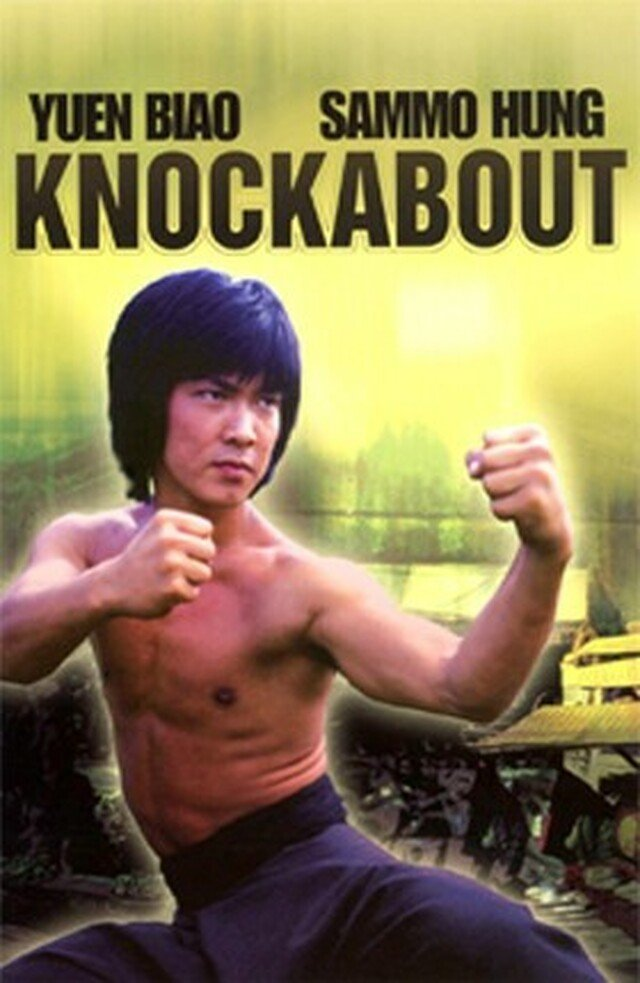
6. Knockabout (1979): for playful physical timing
Knockabout is the choice for a viewer who wants late-1970s action to feel nimble and mischievous. The listing brings together Ka-Yan Leung, Chia-Yung Liu, Biao Yuen, and Kuang Yu Wang, a cast that makes the performer-to-performer rhythm part of the draw. It is a welcome contrast after a solemn revenge or master-test film.
Watch this kind of picture for how bodies share the frame. A reaction, a feint, a stumble, or a sudden shift in status can matter as much as the biggest strike. The comedy is not a pause from the action, it is often woven into the choreography’s timing. That makes Knockabout a smart pick for someone who likes the idea of physical storytelling but wants less ceremony and more play.
7. Dance of the Drunk Mantis (1979): for a teacher-and-student story with bite
Dance of the Drunk Mantis is a good final branch when you want the comic energy of the decade without losing the push-and-pull of a teacher-and-student film. Cinema Kung Fu’s listing describes Sam the Seed trying to train his son, Foggy. That friction gives the story a human hook: lessons are not only a sequence of moves, they are a relationship where both people have something to prove.
Pick it when you want personality in the training. The best versions of this mode let mistakes carry consequences and let a strange method reveal a real idea over time. If it becomes your favourite route, return to the training-movies guide for a wider set of stories built around effort, instruction, and earned change.
How to turn one 1970s film into a better next watch
Do not chase a decade as if it were one single genre. Follow the exact element that held your attention. If the group dynamics in Five Shaolin Masters worked, look for another ensemble or move deeper into Shaw Brothers territory. If Challenge of the Masters made the training matter, stay close to a teacher-and-pupil story. If The Tattoo Connection had the right edge, look for another action picture where the setting changes the stakes. And if Knockabout or Dance of the Drunk Mantis made you laugh, let comic timing guide the next pick.
Cinema Kung Fu is most useful at that moment of recognition. The old-school kung fu collection lets you keep browsing by mood, while individual product pages give you the release details for a title before you order. For a broader orientation, the best kung fu movies guide offers another set of first-watch directions without treating every classic as interchangeable.
The short version
Start with The 7 Grandmasters for a clean, reputation-on-the-line challenge. Choose Five Shaolin Masters when a group story and Shaolin loyalty sound better. Pick Challenge of the Masters for a satisfying learning arc, The Tattoo Connection for a sharper crime-story detour, and Knockabout for comic movement. The 1970s offer more than one door into kung fu cinema, so the best first watch is the one whose particular promise makes you want to find the next film.
Frequently asked questions
What is a good first 1970s kung fu movie?
Start with The 7 Grandmasters if you want a clean, direct challenge story. Its aging master premise makes the stakes easy to understand, and it leads naturally into the wider range of 1970s kung fu styles.
Why do 1970s kung fu movies feel different from later martial arts films?
Many films of the decade build their drama around schools, teachers, rival styles, loyalty, and a final test. By the late 1970s, comic rhythm and more playful training stories also became a major part of the appeal.
Do I need to watch these movies in release order?
No. Choose by mood instead. Start with Five Shaolin Masters for group loyalty, Challenge of the Masters for training, The Tattoo Connection for a sharper international-action change of pace, or Knockabout for comic energy.
What should I watch after a 1970s kung fu movie?
Follow the ingredient that worked for you. The site’s Shaw Brothers guide is useful after a studio-style ensemble film, the training-movies guide suits a teacher-and-student story, and the kung fu comedy guide is the next route when comic timing becomes the main draw.
Related posts

Wuxia Film Guides
Classic Kung Fu Movies: How to Choose Your First
A collector's guide to finding the right first classic kung fu movie, from training stories and rival schools to wild late-1970s action.
Read the guide ›
Wuxia Film Guides
9 Best Kung Fu Movies to Watch Tonight
Looking for the best kung fu movies? Start with nine great picks, from training stories and school rivalries to wild Shaw Brothers action.
Read the guide ›
Wuxia Film Guides
7 Best Kung Fu Comedy Movies for Your Next Watch
Seven kung fu comedy movies to start with, from Jackie Chan action comedy to oddball training stories and late-1970s deep cuts.
Read the guide ›Wuxia Film Guides
7 Best Shaw Brothers Movies for Your First Watch
A practical route into Shaw Brothers movies, from training stories and clan mysteries to swordplay spectacle.
Read the guide ›