Wuxia Film Guides
Wuxia vs Xianxia: How to Tell the Difference
A clear way to separate martial-world drama from immortal fantasy, and choose the kind of Chinese action story you want next.
Wuxia and xianxia can both give you swords, period costumes, old grudges, impossible leaps, and a hero facing a world much larger than themselves. That is why the labels are easy to blur together. The quickest difference is this: wuxia is usually about skilled people trying to live by a code in a dangerous human world. Xianxia is usually about people, spirits, or other beings pursuing power, enlightenment, and immortality across a supernatural one.
That shortcut helps, but it should not become a gatekeeping rule. Chinese storytelling traditions overlap, and films can borrow freely from martial arts, folklore, fantasy, romance, ghost stories, and historical drama. The useful question is not whether a title passes a perfect label test. It is what kind of experience it is promising you. Do you want a tight story about loyalty, rivalry, and a blade drawn at the wrong moment, or a journey through spiritual power, legendary creatures, and worlds beyond the mortal one?
The short answer
Choose wuxia when you want the human martial world. Its heroes are fighters, wanderers, teachers, outlaws, guards, scholars, or people caught between rival groups. Their skills can look extraordinary, but the drama stays close to reputation, obligation, injustice, training, and the cost of doing the right thing. The setting is often jianghu, the loose social world of martial artists, inns, clans, and old promises explored in Cinema Kung Fu's guide to jianghu.
Choose xianxia when you want the immortal and supernatural world. Cultivation, ascension, gods, demons, spirits, magical artifacts, reincarnation, and separate realms are usually not side details. They are the engine of the story. A character may train not simply to win a duel or defend a village, but to transcend death, enter another realm, or survive a conflict between forces far beyond ordinary society.
The two are related rather than opposed. The Science Fiction and Fantasy Writers Association's overview of wuxia describes a broad tradition that ranges from grounded martial stories to highly fantastical tales, including the xianxia line that grew from earlier xia narratives. That history is a useful reminder that the boundary is real enough to guide a viewer, but not rigid enough to erase the shared roots. Read the SFWA overview of wuxia's evolving traditions.
Start with the world, not the fight
Both genres can have dazzling action. The difference becomes clearer when you ask what kind of world the action belongs to. Wuxia generally begins with people. A swordsman has a teacher, a clan has a grievance, a town has been mistreated, or a traveller owes someone a favor. The story may include a rooftop leap or a famous secret technique, but the conflict is still legible in human terms. Who deserves trust? What does a promise cost? When should a hero step outside the law?
Xianxia generally begins with a larger order of existence. A sect might be training disciples toward spiritual advancement. A character may face a heavenly trial, a demon, a spirit realm, an ancient artifact, or the consequences of a past life. The stakes can be personal, but they extend beyond the village, court, or martial school. A scholar of contemporary Chinese fantasy describes immortality-cultivation fiction as drawing on Daoist alchemy and wider religious and cultural traditions to build a distinct cultivation world. The Virginia Tech record for that research explains the cultivation tradition.
That distinction matters when choosing a watch. If you want to follow relationships inside a tense martial society, wuxia is likely your lane. If you want a story where the rules of reality keep opening outward, xianxia is likely closer. Neither is the more serious or more authentic choice. They simply ask you to enjoy different kinds of escalation.
Five signals you are watching wuxia
1. Skill comes from training, not transcendence
Wuxia heroes may accomplish things that would make a real martial artist raise an eyebrow. They can move with startling speed, use a weapon with impossible precision, or survive punishing fights. Yet the story usually treats ability as an extension of discipline, technique, lineage, or hard-won experience. The question is often whether the hero can use skill honorably, not whether they can become a god.
2. Reputation changes a room
In a wuxia story, a name can land like a weapon. A former master, an exiled student, a feared family, or a fighter carrying an old debt may transform a quiet inn into a tense negotiation. That attention to history is a major part of the pleasure. The person across the table is rarely just a stranger, and the fight that follows usually settles more than a physical contest.
3. The central problem is moral as well as physical
A classic wuxia conflict often asks a hero to choose between competing loyalties. Protect a friend or obey a teacher. Keep a promise or keep a family safe. Respect the law or confront a corrupt authority. The British Film Institute's survey of wuxia swordplay is useful here because it traces the genre through films built around chivalry, romance, and heroic action, not only combat. See the BFI's wuxia film selection.
4. The action keeps a human scale
There can be stylized movement, but the world is not usually organized around climbing an endless ladder of cosmic power. A fighter may be legendary in their corner of jianghu, yet their victories still have human consequences: a friend is lost, a teacher is betrayed, a town is freed, or a debt is finally repaid.
5. The best next question is often "who do they owe?"
When a movie introduces a weapon, an old companion, a rival school, or a traveler with a secret, do not only ask who is strongest. Ask what history sits behind the encounter. That approach makes complex plots easier to follow. It also explains why wuxia can feel so satisfying even before the first major duel begins.

Five signals you are watching xianxia
1. Cultivation is a central journey
Cultivation is more than practice or a training montage. It is a long pursuit of spiritual and supernatural growth. A character may refine qi, enter new stages of power, seek longevity, or work toward immortality. The progress often changes what kind of beings, places, and conflicts the character can reach.
2. The supernatural is part of the everyday order
Spirits, demons, gods, immortal masters, magical creatures, and enchanted weapons are not occasional surprises. They are built into how the world works. A forest may belong to a spirit, a sect leader may have lived for centuries, and death may be a transition rather than the final end of a character's story.
3. Power expands across realms
Xianxia frequently moves beyond one earthly setting. Mortal life, celestial courts, underworlds, hidden domains, and other realms can all shape the story. This wider scale changes the feeling of danger. A conflict can begin with a family or a sect and grow into a struggle over fate, rebirth, or access to a supernatural world.
4. Fate and enlightenment matter alongside revenge
Wuxia certainly has revenge, but xianxia is more likely to frame a character's path through karma, destiny, spiritual awakening, or the question of how a being should use immense power. The emotional stakes can be intimate, but the story is often asking what place a character has in a universe full of forces they cannot initially understand.
5. The story can outgrow the human world
This is the most practical screen test. If the film's world stays focused on people, martial factions, and social obligations, you are probably in wuxia territory. If it increasingly asks you to follow the rules of immortals, cultivation, or separate planes of existence, xianxia is the more helpful label.
Why the labels still overlap
There is no clean wall between the two. Wuxia has always allowed heightened skill, folklore, secret arts, strange healers, and moments that stretch ordinary realism. Xianxia still uses swords, sects, grudges, romance, rival teachers, and the language of martial discipline. Modern films and series often combine the visual grammar of both because audiences enjoy the mixture.
That is why it is better to talk about a film's center of gravity. Is its main pleasure a human-scale martial code, or a supernatural path toward transcendence? A title can include a fantasy image and still feel fundamentally wuxia if its emotional core is a promise, a reputation, or a personal debt. A title can feature spectacular swordplay and still feel xianxia if its real conflict is cultivation, immortality, and the order of the cosmos.
For another useful distinction inside the martial-arts side of the map, see Cinema Kung Fu's wuxia versus kung fu guide. Kung fu films often foreground training and physical technique. Wuxia gives more room to swordplay, jianghu, and chivalric pressure. Xianxia then expands the frame toward the supernatural.
How to choose your next watch
Pick wuxia when you want: a tense inn, competing loyalties, a wandering swordsman, a bitter teacher-student history, a clan dispute, a hero facing an unjust power, or action where each exchange exposes character. Start with the beginner's wuxia guide if you want the bigger picture, or the best wuxia movies list if you want a route through different moods and eras.
Pick xianxia when you want: cultivation, immortals, spirit worlds, magical transformations, mythic creatures, cosmic romance, or a story that treats human limits as the beginning rather than the boundary. Many titles will mix those elements with martial arts, so use the balance of the story rather than one visual effect to decide what you are in the mood for.
Pick a hybrid when you want both: a film may start with a swordsman and a worldly dispute, then introduce a larger mythic layer. That can be the fun. You do not need to memorize terminology before watching. The labels simply give you better words for what you liked and what you want more of.
Where Cinema Kung Fu fits in
Cinema Kung Fu is strongest when the question is, "What swordplay or martial-world film should I track down next?" The swordplay collection gives you a practical place to follow the wuxia side of this guide: rival factions, dangerous journeys, old codes, and fighters making difficult choices in a human world.
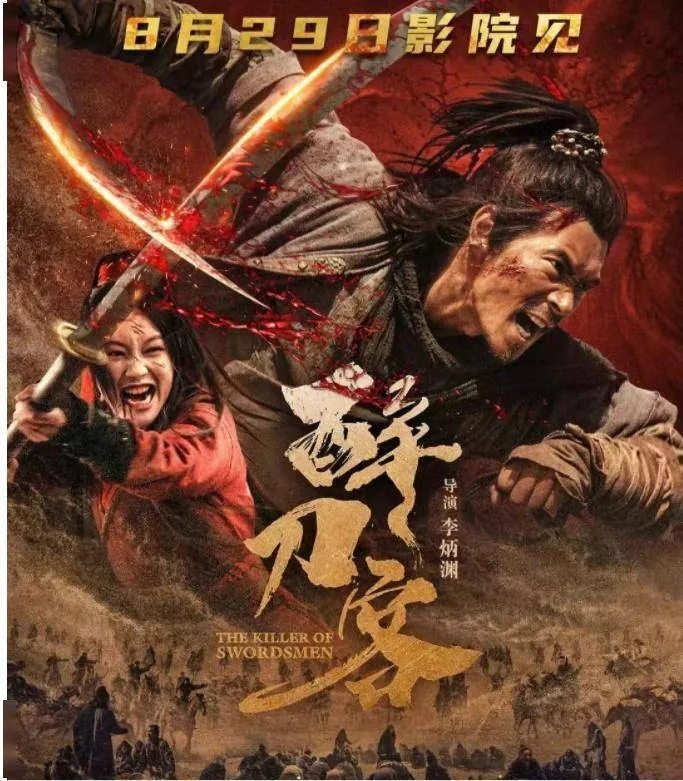
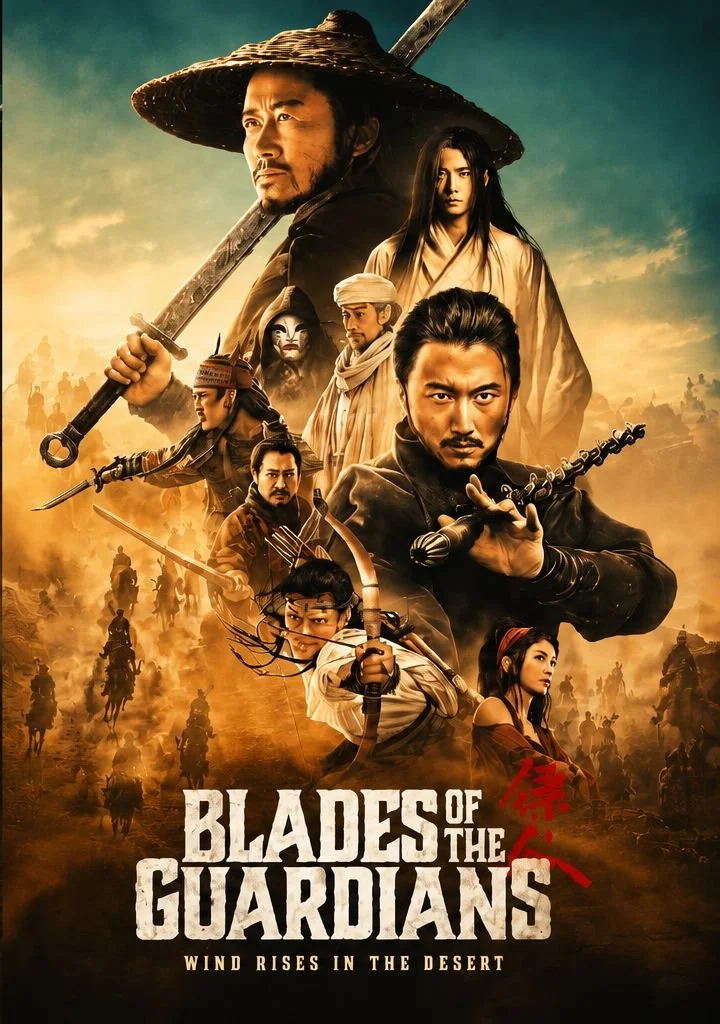
For a current starting point, The Killer of Swordsmen follows a feared bladesman who arrives in an isolated desert town to repay an old kindness. That premise is pure martial-world pressure: a personal debt, a threatened community, and a hero deciding whether to draw the blade again. Blades of the Guardians: Wind Rises in the Desert offers another route through rival clans and swordplay, while The Butcher's Blade is a newer choice for viewers who want a sharp, action-forward martial-world adventure.
Before ordering a hard-to-find title, Cinema Kung Fu's Disc Guide explains the made-on-demand format and what collectors should expect. The point is not to force every release into a label. It is to make it easier to spot the kind of story that belongs on your shelf.
The short version
Wuxia is usually the better label for martial chivalry stories with human-scale stakes: training, loyalty, reputation, justice, rival schools, and the dangerous rules of jianghu. Xianxia is usually the better label for stories organized around cultivation, immortality, spirits, gods, magical realms, and supernatural growth.
Both can have swords. Both can have impossible movement. Both can be romantic, violent, funny, tragic, or strange. Watch the world around the hero. If their hardest problem is how to honor a promise in the martial world, you are probably watching wuxia. If their path leads toward transcendence beyond that world, you are probably watching xianxia.
Frequently asked questions
Is wuxia more realistic than xianxia?
Usually, yes, but it is better to think in terms of scale rather than strict realism. Wuxia can include astonishing agility and martial skill, yet its heroes remain part of a human world of training, reputation, debt, and political pressure. Xianxia more often moves into immortals, spirits, magical realms, and powers that exceed ordinary human limits.
Does every fantasy martial arts movie count as xianxia?
No. A fantasy element alone does not settle the label. A story can use heightened action or folklore while still focusing on human martial artists and jianghu obligations. Xianxia becomes the more useful label when cultivation, immortality, deities, spirits, magical artifacts, or multiple supernatural realms drive the story.
Can a movie be both wuxia and xianxia?
Yes. The boundary is flexible, especially in film, television, games, and newer stories that borrow from several traditions. Use the labels as a way to describe the experience a story offers, not as a test a film must pass perfectly.
What should I watch if I prefer wuxia?
Start with a swordplay film where loyalty, revenge, rival schools, or a hard moral choice are more important than becoming stronger. Cinema Kung Fu's swordplay collection is a good place to explore, with modern titles such as The Killer of Swordsmen and Blades of the Guardians alongside older martial-world stories.
What should I watch if I prefer xianxia?
Look for stories where the supernatural world is central: immortals, cultivation, spirits, gods, demons, magical weapons, or journeys across realms. Cinema Kung Fu's current collection is strongest in martial arts and swordplay, so the wuxia side of this comparison is the more direct fit for most of its films.
Related posts
Wuxia Film Guides
What Is Wuxia? A Beginner's Guide to Chinese Swordplay Movies
Learn what wuxia means, how it differs from kung fu movies, and the best first Chinese swordplay films to watch.
Read the guide ›Wuxia Film Guides
9 Best Wuxia Movies for Every Kind of Viewer
The best wuxia movies for a first watch, from classic inn thrillers to modern swordplay spectacle.
Read the guide ›
Wuxia Film Guides
Wuxia vs Kung Fu: What's the Difference?
A practical way to tell swordplay legend from grounded martial arts action, and find the right next watch.
Read the guide ›
Wuxia Film Guides
Jianghu Meaning: The World Behind Wuxia Movies
What jianghu means, why it matters in wuxia, and how it helps you read the swordsmen, inns, and rival clans on screen.
Read the guide ›